
Hello, Django Mavericks and PyNinjas I hope you are all doing well.
At ScaleReal we work extensively on Python/Django Applications and have built a lot of highly scalable applications for various clients of ours.
Welcome to the dawn of a new era of Django Setup 2024! Get ready to embark on a journey of exploration and discovery as we uncover the secrets of the Modern Django Setup. Keep your eyes peeled for more exciting blog posts in this series, coming soon!
In the last blog, we explored the advantages of using a custom directory structure, what is 12-factor app implementation, and a detailed explanation of the first six factors. If you haven’t read it, please 🙏 check the link below👇
streamlining-your-development-process-with-12-factor-app-implementation-part-1
In this article, we’ll understand the remaining six factors. So, let’s get started!
Here’s a list of everything which will be covered in this article:
Detail Explanation of the remaining six factors.
7. Port binding
Export services via port binding
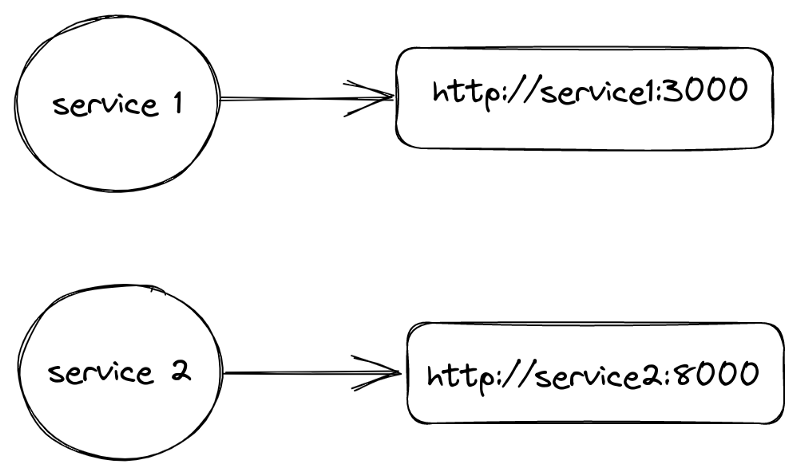
The port binding factor in the 12-factor app is the ability to bind applications to a port exposed to the external environment. This factor allows applications to be decoupled from any specific deployment environment, making them easier to scale and maintain. This port binding can be done directly when deploying the application, or through a proxy, such as a web server or an application server.
Advantages
- Flexibility: Port binding makes it possible to deploy an application to different environments without having to change the application code. This means that the application can be deployed to different servers or cloud providers without having to change the code.
- Scalability: By making the port number configurable, it is easier to scale an application by adding more instances of the application.
- Security: By making the port number configurable, it is easier to secure an application by changing the port number and ensuring that only authorized requests are allowed.
Examples:-
- Amazon Web Services: Amazon Web Services (AWS) makes use of port binding when deploying applications to its cloud platform.
- Heroku: Heroku is a cloud platform that makes use of port binding when deploying applications.
- Kubernetes: Kubernetes is a container orchestration platform that makes use of port binding when deploying applications.
8. Concurrency
Scale out via the process model
The Concurrency factor in the 12-factor app is the ability of an application to handle multiple requests or tasks concurrently instead of in a single thread, to maximize throughput and minimize latency. This allows an application to scale quickly and efficiently to serve more users. It also improves reliability, as it is less likely to crash if one request fails.
Advantages:-
- Easier to maintain: By separating tasks into separate processes, a developer can more easily manage and maintain the application.
- Increased throughput: By running tasks in parallel rather than in a single thread, applications are able to handle more requests with less time and resources.
- Improved response times: By running tasks in parallel, applications are able to respond to requests more quickly, reducing latency and increasing the user experience.
- High scalability: Applications can easily scale up or down to handle different levels of demand, allowing for more efficient use of resources.
Examples:-
- Social media networks such as Twitter, Instagram, and Facebook handle millions of users and requests concurrently.
- Streaming services such as Netflix and Hulu use concurrency to handle large numbers of users streaming video at once.
- Online gaming platforms such as Xbox Live and PlayStation Network use concurrency to handle multiple gamers playing simultaneously.
- Google uses a distributed system of servers to serve its search engine results and other services, such as Google Maps, quickly and efficiently.
- Amazon utilizes a number of concurrent processes to power its e-commerce platform, including web servers, applications servers, and database servers.
9. Disposability
Maximize robustness with fast startup and graceful shutdown
The Disposability factor in the 12-factor app is the ability of an application to be easily and quickly replaced. This means that if a component of the application fails, it can be quickly and easily replaced without any disruption to the user experience. This can be achieved through the use of containers and microservices, which can be quickly spun up and shut down.
Advantages:-
- Improved reliability: By having components that can be quickly replaced, any disruption to the service is minimized.
- Faster development: By having components that can be quickly replaced, developers are able to develop and deploy changes faster.
- Cost savings: By having components that can be quickly replaced, organizations can save money by avoiding the need for expensive hardware and maintenance.
Examples:-
Netflix, Amazon, and Dropbox use containers and microservices to keep their services running and to quickly replace components when needed.
10. Dev/prod parity
Keep development, staging, and production as similar as possible
Dev/prod parity is a factor in the 12-factor app that emphasizes the importance of maintaining a consistent development and production environment. This factor states that development, staging, and production environments should be as similar as possible, as to avoid any surprises when deploying code to production.
Advantages:-
- Increased reliability: Having parity between development and production environments makes it easier to replicate and debug issues that may arise in production.
- Faster deployment: Keeping parity between environments ensures that the code that is tested and run locally is the same code that is deployed to production. This eliminates the need for additional testing and reduces the time it takes to deploy code to production.
- Improved security: Having parity between development and production environments helps ensure that the same security measures are in place in both environments. This helps to prevent security issues from occurring in production due to a lack of security in development.
Examples:-
- Netflix uses Docker to ensure parity between its development and production environments. Docker containers are used to replicate the exact same environment, including software versions and configurations, that is used in production.
- GitHub uses its own GitHub Actions to automate the deployment process. This ensures that the same code and configuration are deployed to production regardless of the development environment.
- Google uses Kubernetes to manage its cloud infrastructure. Kubernetes provides consistent environments across all deployments, making it easy to maintain parity between development and production environments.
11. Logs
Treat logs as event streams
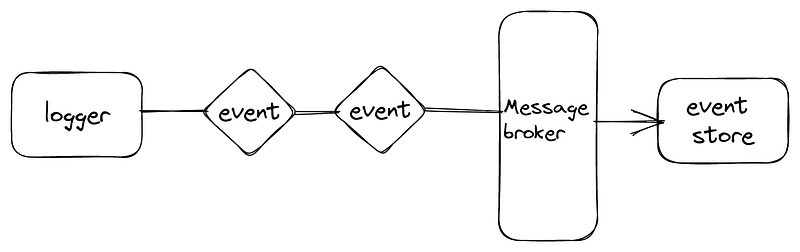
The Logs factor in the 12-factor app is a type of standard for developing software as a service application. It helps developers create applications that are easy to maintain and scale. With the Logs in the 12-factor app, output from the application is captured and stored in a centralized location for easy access and analysis. This enables developers to quickly identify and troubleshoot issues, as well as gain insights into user behavior and performance.
Advantages:-
- Increased visibility into application performance: Logs can be used to identify and analyze performance issues, such as slow loading times or unexpected errors.
- Enhanced debugging capabilities: Logs can be used to quickly identify and troubleshoot bugs and other issues with the application.
- Improved scalability: Logging can help ensure that the application scales properly and can handle increased loads.
Examples
- Web server logs: Web server logs provide detailed information about web requests, such as the IP address of the request, the URL requested, and the response code.
- Application logs: Application logs provide details about the internal workings of the application, such as function calls and errors.
- Security logs: Security logs provide details about potential threats and malicious activity, such as suspicious logins or network traffic.
Netflix is a great example of an organization that uses the 12-factor app Logs. Netflix uses an open-source logging platform called EFK (Elasticsearch, Fluentd, and Kibana) to capture and analyze log data from applications and services. This enables Netflix to quickly identify and address performance and user experience issues, as well as gain valuable insights into user behavior.
12. Admin processes
Run admin/management tasks as one-off processes
The Admin Process is a component of the 12-factor app methodology which provides an efficient and secure way to manage the application’s administrative tasks. This process is designed to ensure that administrative tasks, such as database migrations, system updates, and log monitoring, are handled in a consistent and predictable manner.
Advantages:-
- Improved scalability: Keeping admin tasks separate from the code for the application itself allows for easier scalability. As the application grows, the administrator can scale the admin tasks independently.
- Improved maintainability: By separating the code used for administrative tasks from the code used for the application, the code can be better maintained. This makes it easier to debug and deploy changes.
- Improved visibility: Keeping the code for admin tasks separate from the code used for the application allows for better visibility into the performance of the application.
Examples:-
- Heroku: The Heroku platform uses the Admin Process to manage system updates and configuration changes.
- Google: Google Cloud Platform provides a set of command-line tools for managing administrative tasks.
- Amazon Web Services: Amazon Web Services provides a set of automation tools for managing administrative tasks.
That’s it from my side folks 🧑💻. I hope this blog has been helpful in giving you a better understanding of the topic. Until next time, stay safe and keep learning!
At Scalereal We believe in Sharing and Open Source.